
Revision rhinoplasty is one of the most common secondary cosmetic procedures. It’s a deeply personal decision that requires careful thought and consideration. Therefore, it’s essential to choose a highly experienced and board-certified plastic surgeon who understands diverse surgical techniques and is able to assess your unique nasal anatomy to determine if you are an ideal candidate for this corrective procedure.




What Is Revision Rhinoplasty?
There are various reasons why revision rhinoplasty, also known as a secondary nose job, may be needed. Sometimes, the desired outcome from the initial surgery was not achieved due to unexpected healing patterns or structural changes. Other times, it could be attributed to dissatisfaction with the initial results or the presence of new aesthetic concerns that were not addressed in the initial rhinoplasty procedure. In some cases, functional issues such as breathing difficulties or a deviated nasal septum persist after the initial surgery.
How Is a Revision Rhinoplasty Performed?
Revision rhinoplasty begins with a thorough evaluation to understand exactly what happened during the previous procedure(s) and which structural changes led to the current concerns. This includes a detailed consultation, careful examination of nasal support and aesthetics, and review of prior operative notes or photos when available.
Once the underlying issues are identified, a tailored surgical plan is created. Revision surgery often involves restoring missing support, reshaping cartilage, correcting scar-related changes, and refining the bridge or tip to achieve a stable, functional, and natural-looking result.

Common Reasons For Revision Rhinoplasty
Unsatisfactory Result
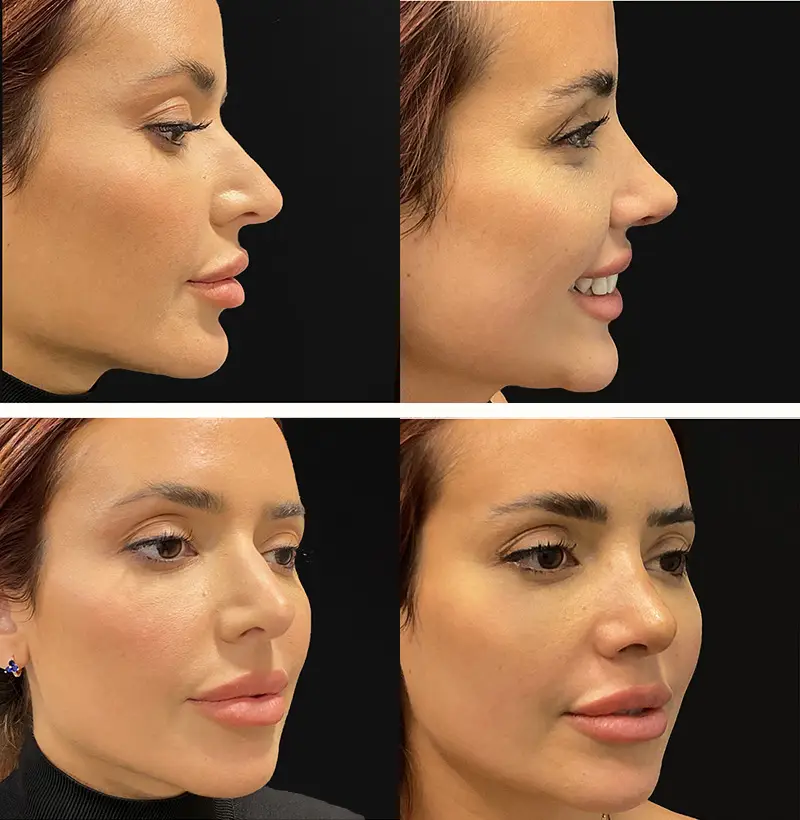
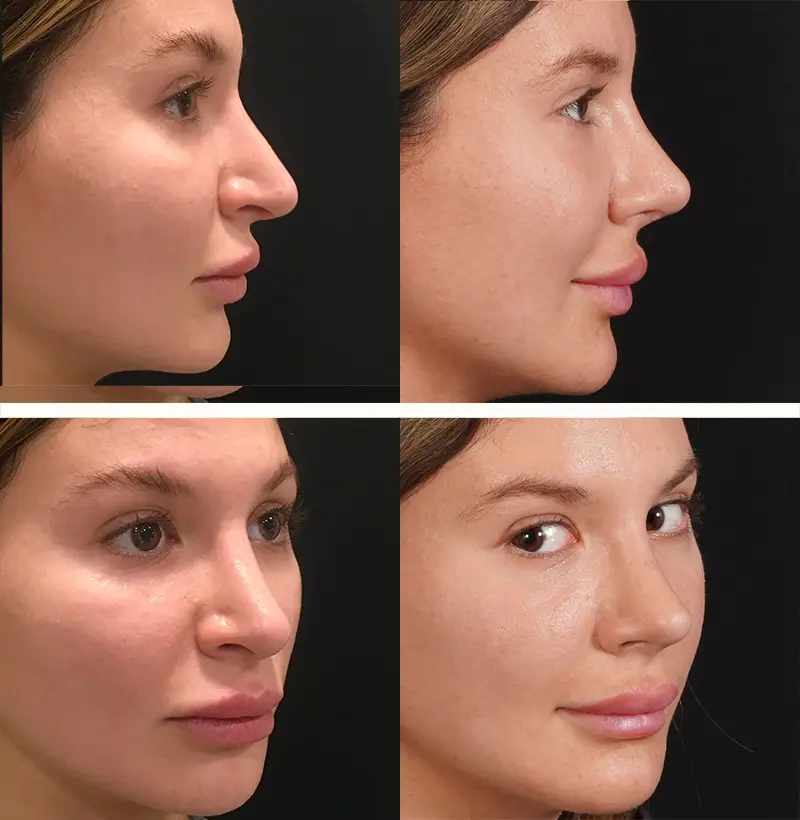
When the initial rhinoplasty did not achieve the desired cosmetic result. This could include issues like uneven nostrils, a crooked nose, or an unsightly bump or depression on the nasal bridge.
Breathing Difficulties
In some cases, the prior rhinoplasty either caused new breathing issues or failed to successfully correct existing ones.B y correcting structural issues inside the nose, revision surgery restores proper airflow and relieves post-surgical breathing problems.
Improper Healing
Maybe the nose didn’t heal properly after previous surgery. This can be due to factors such as uneven healing, cartilage shifting, or scar tissue formation. Revision rhinoplasty can help correct this asymmetry and restore balance to the nose
Good Candidates for Revision Rhinoplasty
You may be a good candidate for revision rhinoplasty if you:
Are unhappy with the appearance or breathing function after a previous rhinoplasty.
Notice persistent issues such as asymmetry, collapse, irregular contours, or unresolved nasal obstruction.


Why Choose Dr. Franck for Your Revision Rhinoplasty?
Dr. Philipp Franck is a board-certified plastic surgeon with advanced expertise in both primary and revision rhinoplasty. He has mastered a wide range of structural, preservation, and advanced grafting techniques, allowing him to diagnose complex issues and rebuild support with precision. Recognized as a Castle Connolly Top Doctor and a New York Rising Star, he is trusted for his meticulous approach, aesthetic judgment, and natural, long-lasting results.


Surgical Expertise & Recognition
Dr. Franck combines advanced technique with deep anatomical knowledge, earning recognition as one of NYC’s rising stars in plastic surgery.
Refined, Natural Aesthetics
Dr. Franck’s approach to natural facelifts focuses on balance and subtle rejuvenation, avoiding the overly tight or “done” look.
Boutique Experience in Manhattan
Every consultation and procedure is tailored to you, with the highest level of privacy, comfort, and personalized care in an elegant Manhattan setting.
Revision Rhinoplasty Timeline
1. Private Consultation
Your journey begins at Dr. Franck’s Upper East Side office, where he evaluates your nose, discusses your previous surgeries, current concerns, and goals. Based on a thorough assessment he creates a personalized surgical plan.
2. Custom Surgical Plan
Every revision rhinoplasty requires a tailored approach. Depending on available cartilage, prior surgical changes, and current concerns, a customized plan is created to address your specific needs.
3. Early Recovery (Week 1)
You’ll have a splint in place and rest comfortably at home. Swelling and bruising begin to fade, and Dr. Franck checks in frequently to ensure smooth healing.
4. Refinement Phase
(Weeks 2–4)
Your splint and sutures have been removed. Patients return to social activities, with continued improvement as contours refine and incisions mature.
5. Mid-Term Healing Phase
(Months 3–6)
Your nose continues to refine during this stage, with further improvements in breathing and function. Much of the remaining swelling gradually subsides, revealing a more defined result.
6. Long-Term Refinement
(Months 6–12)
From six to twelve months, the nose enters its final healing phase. Subtle refinements continue as residual swelling resolves, cartilage settles into its long-term position, and the overall shape becomes more defined. This is typically when the final result can be fully appreciated.
Facelift FAQs
Yes, Revision Rhinoplasty often requires a slightly longer healing process than a primary rhinoplasty. Because the tissues have already been operated at least once, there may be more scar tissue, less native cartilage, and a greater need for grafting or structural reconstruction. Swelling can take longer to resolve, and the final result may take up to 12–18 months to fully mature. That said, most patients still show results early and feel comfortable returning to normal activities during the typical early recovery period.
Most patients need to wait at least 6-12 months before undergoing revision rhinoplasty. This allows the nose to heal, swelling to resolve, and the final shape to stabilize. These critical factors for accurately diagnosing what truly needs to be corrected. In rare cases involving functional problems or significant structural collapse, a minor early revision may be considered sooner, but this is the exception, not the rule. Dr. Franck will evaluate each patient carefully to determine the safest timing.
Revision rhinoplasty carries the same general risks as primary rhinoplasty, such as bleeding, infection, asymmetry, breathing issues, scarring, or anesthesia-related issues. However the complexity of secondary surgery can increase certain challenges. Because the tissues may be scarred or weakened from prior surgery, there is a higher risk of asymmetry, contour irregularities, persistent swelling, or difficulty achieving full correction. Breathing problems may require additional structural support or grafting. In rare cases, further revision may be necessary. It is so crucial to choose an experienced revision rhinoplasty surgeon, in order to decreae these risks and helps ensure a safer, more predictable outcome.
Revision rhinoplasty is usually more expensive than a primary rhinoplasty because the surgery is more complex and often requires additional time, grafting, or reconstruction. In New York City, most revision procedures range from $10,000 to $35,000, although highly complex cases can exceed this range. Costs vary based on the complexity of the case, the extent of correction needed, operating room and anesthesia fees, and whether cartilage must be taken from the septum, ear, or rib. During your consultation, Dr. Franck will provide you with a personalized estimate based on your specific concerns and the complexity of your case.
Revision rhinoplasty can sometimes be covered by insurance when the procedure is performed to address functional problems such as difficulty breathing, nasal obstruction, or structural collapse. Cosmetic concerns are usually not covered. Dr. Franck will help determine the degree of functional problems and provide detailed documentation for the insurance approval process. A preauthorization review will clarify what may be covered and what your financial responsibility will be.
Most revision rhinoplasty procedures do not create additional visible scars. The surgery is usually performed through the same small incision at the base of the nose that was used in the original operation, which typically heals as a faint line that is difficult to see. Internal incisions are hidden inside the nose and leave no visible marks. In more complex cases, minor incisions may be needed to harvest cartilage from the ear or rib, but these are placed in discreet locations and tend to heal well. Your surgeon will explain exactly what to expect based on your individual surgical plan.
Yes, revision rhinoplasty can often be combined with other procedures when medically appropriate. Many patients choose to address additional concerns at the same time, such as other facial procedures or body procedures including breast augmentation or tummy tuck. Combining surgeries can reduce overall recovery time and may provide better facial balance and harmony. Dr. Franck will determine whether it is safe and beneficial to combine procedures based on surgery time, healing history, and overall health.
There are excellent rhinoplasty surgeons in many countries. There is no single “best” country. What matters most is choosing an experienced surgeon who performs a high volume of rhinoplasty, is comfortable with complex revision work, and is willing to guide you through a detailed recovery and follow up process.
Revision after primary rhinoplasty is not uncommon, with published studies showing revision rates often between 5 and 15 percent. This highlights how delicate nasal surgery can be and how important reliable follow up is when healing does not go exactly as planned. Traveling abroad for such a high level procedure can limit your ability for troubleshooting, management of swelling or scar tissue, and any minor adjustments that may be needed. For this reason, the safest choice is often a surgeon who combines strong expertise with consistent, accessible postoperative care.
Real Patient Reviews
“As soon as we met with Dr. Franck we knew he was extremely knowledgeable and skilled. He has a trained eye and is an artist. We have had experience with other plastic surgeons in the past and he has been the absolute most professional, knowledgeable, skilled and has an amazing bedside manner.”
“When I had my first consultation with him, I felt very welcomed and comfortable. After sharing the trauma and lack of confidence I was battling, he immediately put himself in my shoes and helped me come up with the best solution (which indeed was the procedure). Being that he was so confident, passionate, and professional; I knew that I could trust him.”
“As soon as we met with Dr. Franck we knew he was extremely knowledgeable and skilled. He has a trained eye and is an artist. We have had experience with other plastic surgeons in the past and he has been the absolute most professional, knowledgeable, skilled and has an amazing bedside manner.”
Schedule Your Private Consultation
Discover what a facelift can do for your confidence and self-image. Schedule a private consultation with Dr. Philipp Franck, a leading facelift surgeon in New York, to discuss your personalized plan today.